December 24, 2025

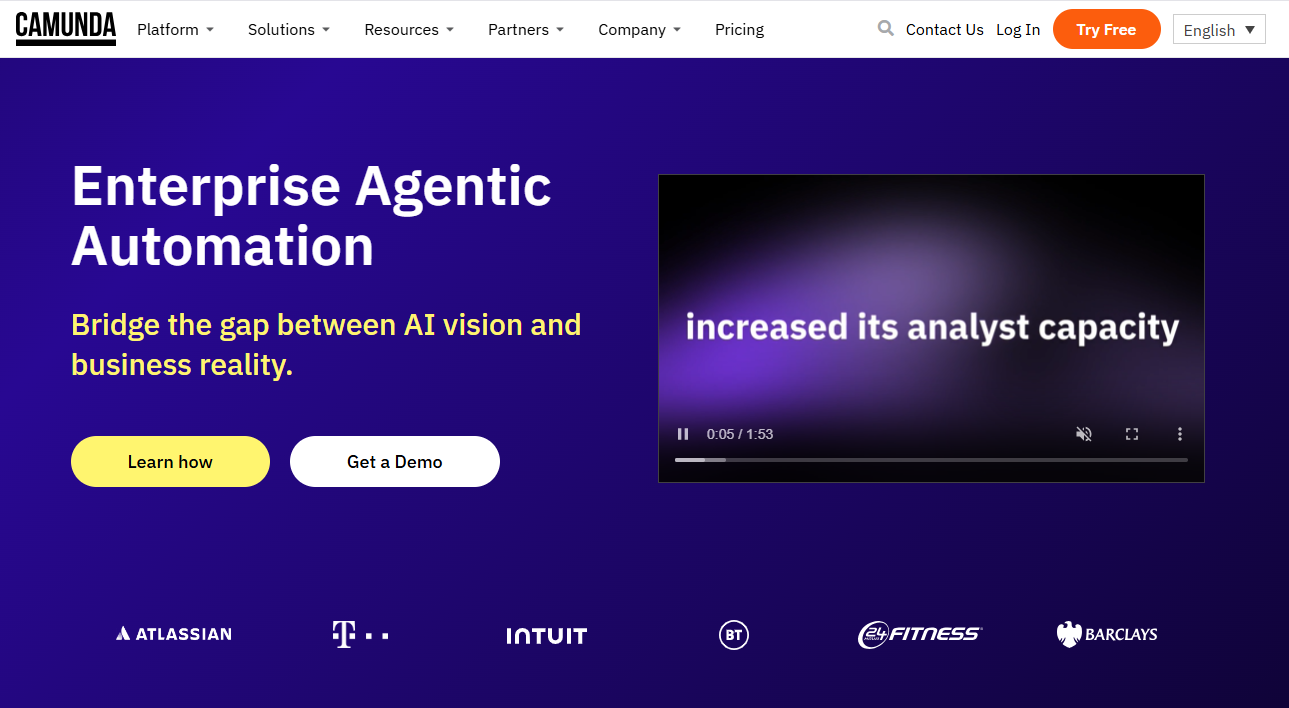

Are you looking for a better way to manage your company's complex tasks? Camunda is an open-source business process management platform that helps you automate workflows and key decisions. It uses a powerful workflow engine to execute visual process models, freeing up your team to focus on more important, strategic work. Essentially, Camunda acts as an orchestrator, ensuring that your business processes run smoothly and efficiently from start to finish, driving powerful automation across your organization.
The Camunda platform works by turning visual diagrams into executable processes. Your teams can design a business process model that outlines every step of a workflow. This isn't just a static picture; it's a blueprint that the system can actually understand and run.
Once you deploy this model, the workflow engine takes over. It manages the flow of tasks, communicates with different systems, and ensures every part of the process is completed in the right order. This approach to process automation gives you full visibility and control over how work gets done. If you're a beginner looking to get started with Camunda, begin by exploring the official Camunda documentation and tutorials to understand basic concepts and setup. Download the Camunda platform, try out sample process models, and use the Modeler tool to design simple workflows. This hands-on approach will help you build a strong foundation in workflow management using Camunda.
When evaluating business process management tools, you'll find that Camunda has some distinct advantages. Unlike many rigid, proprietary systems, Camunda is built on an open architecture. This gives your development teams incredible flexibility to customize and extend the platform to fit your unique needs without being locked into a single vendor. For those interested in learning more or getting started, you can find comprehensive documentation and resources for Camunda on the official Camunda website. They offer guides, API references, tutorials, and a community forum to help support your journey with the platform.
This open-source foundation empowers you with greater control and transparency. The workflow automation engine is not a "black box," so your teams can see exactly how it operates. This developer-friendly approach is a key differentiator from many traditional BPM suites.
What makes the Camunda platform a top choice?
The Camunda platform has evolved significantly, with Camunda 8 marking a major architectural shift from its predecessor. Camunda 7 is a mature and stable platform built around a Java-based workflow engine, widely trusted for its reliability in on-premise deployments. It has been a cornerstone for many organizations' process automation strategies.
With the release of Camunda 8, the platform was re-imagined for the cloud era. It introduces Zeebe, a new workflow engine designed for high-throughput and horizontal scalability. This cloud-native approach makes Camunda 8 ideal for organizations that need to handle large volumes of transactions and orchestrate processes across distributed microservices. This evolution ensures the platform meets modern enterprise demands.
Here is a quick comparison based on the latest release notes: | Feature | Camunda 7 | Camunda 8 | |---|---| | Architecture | Monolithic, Java-based | Cloud-native, microservices-friendly | | Workflow Engine | Embedded Java Engine | Zeebe (standalone, scalable engine) | | Scalability | Vertical scaling | Horizontal scaling | | Deployment | Primarily on-premise | Cloud, hybrid, and on-premise |
Camunda is packed with core features that empower both business and technical teams. At its heart is a powerful workflow engine, Zeebe in Camunda 8, which is responsible for executing the processes you design. This engine is built to be horizontally scalable and fault-tolerant, ensuring your critical workflows are always running.
Beyond just orchestrating tasks, the platform also excels at decision automation. By combining visual modeling tools with robust execution engines, Camunda provides a comprehensive solution for managing complex business logic and end-to-end processes. The following sections will explore how it uses BPMN for workflows and DMN for decisions.
A standout feature of Camunda is its use of Business Process Model and Notation (BPMN), an industry-standard graphical language. BPMN allows you to create visual flowcharts of your business processes. Using a tool like the Camunda Modeler, your teams can map out every step, from automated tasks to human decisions, in a way that everyone can understand.
This visual approach to business process automation is powerful because it bridges the communication gap between business stakeholders and software developers. The BPMN models you create aren't just diagrams for documentation; they are directly executable by Camunda's engine. This means your visual design becomes the actual, running workflow.
This method of process orchestration offers several benefits:
In addition to automating workflows, Camunda also helps you automate complex business decisions. It does this using Decision Model and Notation (DMN), a standard for modeling repeatable decisions. Think of DMN as a way to create clear, visual decision tables that represent your business rules, such as determining customer eligibility or calculating a discount.
These tables are part of a decision model that can be easily understood and verified by your business experts. Once defined, Camunda's decision engine can execute these rules automatically, ensuring your business decisions are made consistently and accurately every single time. This is a core component of effective decision automation.
By separating decision logic from your application code, you gain immense agility. Business teams can update rules in the decision model without needing to write new code or redeploy the entire system. This allows your organization to respond faster to changing market conditions or new compliance requirements.
One of Camunda's greatest strengths is its ability to connect with the tools and systems you already use. It was designed for integration, allowing it to act as a central orchestrator for your entire technology landscape. Whether you're working with modern microservices or established legacy systems, Camunda can communicate with them.
The platform achieves this through REST APIs, message queues, and a variety of connectors. This flexibility means you don't have to rip and replace your existing infrastructure. Instead, you can layer Camunda on top to unify operations and automate processes that span across multiple external systems. The next sections will cover how this API connectivity works and your deployment options.
Camunda’s API-first architecture is the key to its powerful integration capabilities. The platform exposes extensive REST APIs that allow it to communicate with virtually any external systems. This means you can easily connect your workflows to applications written in different languages, such as Java, .NET, Python, or Node.js.
The platform's vibrant community and open-source nature also contribute to its connectivity. You can find numerous pre-built connectors and client libraries in its GitHub repositories, saving your development teams a lot of time. If a specific connector doesn't exist, you can create your own custom APIs to securely share data between Camunda and your other tools.
Key integration methods include:
Camunda gives you the freedom to choose a deployment model that aligns with your organization's strategy and infrastructure. You can deploy the business process management system on-premise, giving you complete control over your data, security, and hardware. This option is often favored by organizations in highly regulated industries or those with strict data governance policies.
Alternatively, you can leverage a cloud deployment. Camunda 8 is designed as a cloud-native platform, making it perfect for containerized environments like Kubernetes and Docker. The cloud offers immense scalability, simplified maintenance, and faster time-to-value, as you can scale your resources up or down as demand changes. Camunda even offers a SaaS solution to further reduce the operational burden on your IT teams.
Choosing between on-premise and cloud depends on your specific needs for control, scalability, and internal resources. Whether you decide to download and install it yourself or use the managed cloud service, Camunda provides the flexibility to support your goals.
The features of Camunda translate directly into powerful, real-world use cases that benefit organizations across various industries. From finance and insurance to healthcare and logistics, companies use the platform to streamline mission-critical operations. The collaboration it fosters between business users and development teams is key to its success.
These applications go beyond simple task automation. Camunda orchestrates complex end-to-end processes that involve human tasks, RPA bots, microservices, and legacy systems. The following examples will show how companies are using this workflow automation tool to enhance efficiency and achieve measurable business results.
Many enterprises struggle with inefficient, manual workflows that slow down operations and increase costs. Camunda directly addresses this by enabling end-to-end automation of complex enterprise workflows. For example, Covéa Insurance used Camunda to modernize its processes, moving away from systems where employees had to manually handle many tasks.
By automating these processes, they freed up their team to focus on more critical work that adds greater value to the business. Camunda can act as an orchestrator for RPA bots, manage human approvals, and integrate with various backend systems, all within a single, unified workflow. This creates a more streamlined and efficient operational flow.
Organizations use Camunda to boost process efficiency by:
Leading businesses in the United States have achieved remarkable success by implementing Camunda. One of the most compelling success stories comes from Maximus, a major processor of U.S. Medicaid accounts. The company faced challenges managing different regulations across states, which led to building separate, costly applications for each customer.
By adopting Camunda as their process orchestration platform, Maximus transformed its operations. They were able to standardize their business processes using BPMN and DMN, which accelerated development and reduced IT infrastructure costs by transitioning to the cloud. This shift allowed them to serve customers more efficiently and adapt quickly to market changes.
This case is a prime example of how Camunda helps organizations modernize legacy systems and adopt best practices in process automation. By enabling better collaboration and providing a flexible, open-source-based platform, Camunda empowered Maximus to unlock significant business value and improve its competitive edge.
KeywordSearch has an AI Audience builder that helps you create the best ad audiences for YouTube & Google ads in seconds. In a just a few clicks, our AI algorithm analyzes your business, audience data, uncovers hidden patterns, and identifies the most relevant and high-performing audiences for your Google & YouTube Ad campaigns.
You can also use KeywordSearch to Discover the Best Keywords to rank your YouTube Videos, Websites with SEO & Even Discover Keywords for Google & YouTube Ads.
If you’re looking to SuperCharge Your Ad Audiences with AI - Sign up for KeywordSearch.com for a 5 Day Free Trial Today!
In conclusion, Camunda stands out as a powerful tool for effective workflow management, offering robust features that streamline business processes. By utilizing BPMN-based workflow automation and decision modeling with DMN, organizations can enhance efficiency and maintain flexibility in their operations. Its ability to integrate seamlessly with existing systems—whether in the cloud or on-premises—makes it a versatile choice for businesses looking to optimize their workflows. As demonstrated through various success stories, leveraging Camunda can significantly transform how teams collaborate and execute projects. If you’re ready to take your workflow management to the next level, get in touch for a free consultation and see how Camunda can best serve your needs!