January 29, 2026


Here's a quick look at what we'll cover in this guide to Pendo.io:
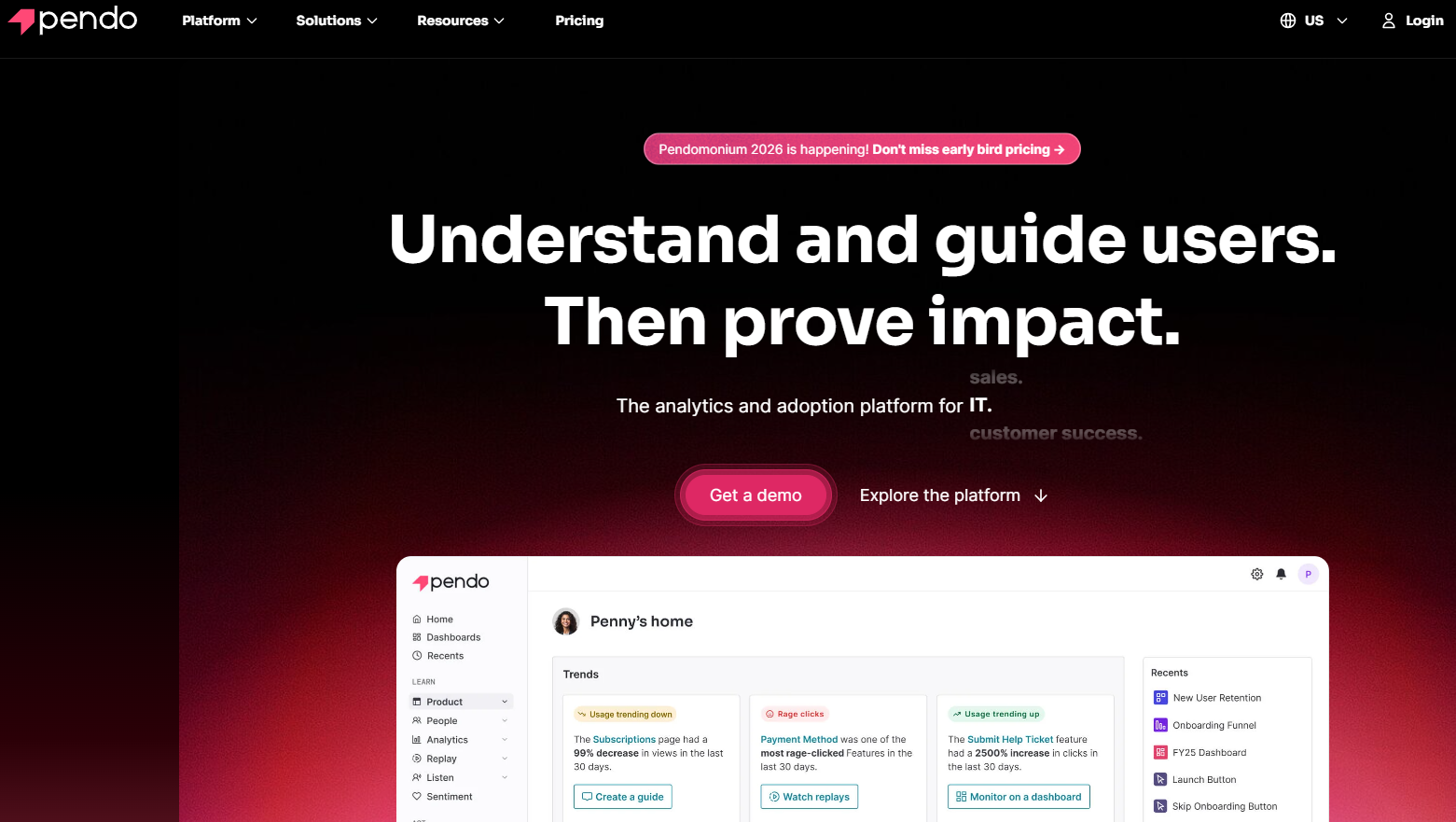
If you're part of a product team, you've likely heard of Pendo.io. So, what is Pendo.io and how does it help with product analytics? It's a leading product analytics tool designed to improve the digital adoption and user experience of your software. For product managers and their teams, Pendo offers a way to capture and analyze product data, turning insights into actions that enhance the product experience. This platform aims to give you a complete picture of how people interact with your product.
Pendo is a powerful product analytics software that helps companies understand user behavior within their applications. It goes beyond traditional web analytics by providing deep behavioral analytics, allowing product teams to see exactly how users engage with different features.
This product analytics tool is used for a variety of use cases, from tracking engagement to guiding users through new features. By understanding how users navigate your product, you can make informed decisions to improve their experience. Let's explore its origins and how it fits into the analytics landscape.
Pendo is a software experience management platform created to help companies understand and optimize user interactions. At its core, Pendo combines product analytics, user feedback, and in-app guidance into a single platform. This empowers non-technical teams, especially product managers, to take control of the product experience.
The company background shows it was designed to serve a range of markets, from high-growth SaaS companies to large enterprises. The main goal is to provide a no-code solution for improving user experiences without relying on engineering resources.
This focus makes Pendo analytics a key tool for organizations pursuing product-led growth or undergoing digital transformation. While specific funding details require checking financial news sources, its growth highlights its impact on the product analytics platform space.
Within the broad product analytics landscape, Pendo carves out its niche by focusing on both analytics and action. The platform automatically captures behavioral data, tracking user interactions like clicks, page views, and form submissions without needing manual tagging for every event. This retroactive analysis is a significant advantage.
This approach allows product managers to analyze usage patterns and understand user journeys through tools like its data explorer. You can see not only what users are doing but also where they might be getting stuck or dropping off.
Ultimately, Pendo analytics is designed to make complex product analytics accessible. It enables teams to move from data to insights and then to in-app actions, like launching a guided walkthrough, all within the same product analytics software. This seamless workflow is how it helps improve the overall user experience.
The Pendo platform is known for its extensive set of key features that cover the entire product experience lifecycle. It’s more than just a product analytics tool; it combines robust analytics with powerful user engagement functionalities.
Core capabilities include in-depth product analytics features, in-app messaging for user guidance, and detailed segmentation to target specific user groups. By integrating these elements, Pendo provides a holistic view of your product data. Now, let’s look closer at its analytics and user guidance tools.
Pendo was built with analytics at its heart, offering comprehensive metrics that allow teams to make data-driven decisions. You can get real-time visibility into key performance indicators through customizable dashboards, tracking everything from user activity to campaign performance.
This product analytics tool provides deep behavioral analytics to uncover patterns and context behind every user action. The platform supports A/B testing, helping you understand which product variations perform best. Key analytics capabilities include:
As a comprehensive platform, this product analytics software gives you the tools to move beyond simple data collection and truly understand your users.
Pendo excels at providing user guidance directly within your application through its "Guides" feature. This in-app messaging functionality is crucial for improving digital adoption and product engagement, especially during onboarding. Product teams can create and launch experiences without needing a developer.
The platform offers a visual design studio with a drag-and-drop editor to build app walkthroughs, tooltips, and banners. These elements help users discover features and learn how to use the product effectively, which greatly enhances the user experience.
Key user guidance features include:
The Pendo platform is fundamentally designed to improve the user experience by connecting product analytics with actionable insights. It empowers product teams to guide users, increase product engagement, and streamline digital adoption.
By analyzing how users interact with your product, you can identify areas of friction and proactively address them. This is especially valuable for critical moments like onboarding, where a positive first impression can significantly boost long-term product engagement. Let's examine how Pendo's tools achieve this.
A smooth onboarding process is critical for retaining new users, and Pendo offers specialized tools to perfect this part of the product experience. By using its user guidance features, product teams can create personalized walkthroughs and checklists that introduce key features at the right time.
The product analytics platform allows you to segment new users based on their roles or needs, delivering a tailored onboarding flow for each group. This ensures that every user gets the information that is most relevant to them, accelerating their journey to value.
By analyzing user behavior during this initial phase, you can identify where people get stuck and refine your user guidance accordingly. This iterative process of analysis and action helps drive digital adoption and sets users up for long-term success with your product.
One of the primary goals of any product team is to increase user engagement and retention, and Pendo’s product analytics provide the tools to do just that. By analyzing behavioral data, you can identify patterns that correlate with churn. For example, you might discover that users who don't adopt a specific feature are more likely to cancel their subscriptions.
Armed with this knowledge, you can use Pendo’s in-app messaging to proactively guide at-risk users toward valuable features, reducing friction and demonstrating the product's full potential. This helps improve product engagement and keeps users active on the platform.
Ultimately, understanding why users stay or leave allows you to make strategic product decisions that drive business outcomes. By focusing on what truly boosts retention, you can build a stickier product that your customers love to use.
For product teams, Pendo is more than just a product analytics tool; it's a strategic asset that can streamline the entire workflow. Product managers can use its insights to inform roadmapping, prioritize features, and ultimately drive product success.
The platform helps reduce the reliance on engineering for data analysis and user communication, freeing up valuable resources. By collecting user feedback directly within the app, teams can also lower the volume of support tickets. Let's explore these benefits in more detail.
Pendo directly impacts the product development cycle by providing product teams with quantitative data on feature usage. Instead of relying on assumptions, product managers can see exactly which features are popular and which are being ignored. This insight is invaluable for building a data-driven roadmap.
With Pendo, feature requests can be centralized and prioritized based on user votes and their potential impact. This ensures that development efforts are focused on initiatives that deliver real value to customers and align with business goals.
By linking customer feedback directly to product initiatives, teams can confidently justify their roadmap decisions to stakeholders. This clear line of sight from user need to development action helps drive product success and ensures that engineering time is spent on what matters most.
A key benefit of Pendo is its ability to gather user feedback directly within the product. This creates a seamless channel for collecting customer feedback without interrupting their workflow, leading to higher response rates and more contextual insights than email surveys.
The platform uses AI-powered sentiment analysis to automatically tag and group qualitative feedback into themes. This helps you spot recurring issues and emerging needs quickly, which can inform everything from bug fixes to new feature development. This can also help you measure campaign performance by seeing feedback in context.
Pendo’s feedback tools include:
When choosing a product analytics platform, it's helpful to see how Pendo analytics compares to others. Unlike Google Analytics, which focuses on web analytics and acquisition, Pendo is built for in-product user behavior analysis.
Its main competitors in the product analytics tool space include platforms like Mixpanel and Amplitude. While all three offer powerful analytics, they differ in their feature sets, complexity, and pricing models. Let's break down some of these differences.
When evaluating a product analytics tool, it's common to compare Pendo with Amplitude and Mixpanel. All three are leaders in the product analytics software market, but they have different strengths. Pendo stands out by bundling robust analytics with built-in user guidance and feedback tools, making it an all-in-one solution.
In contrast, Amplitude and Mixpanel are often seen as pure-play analytics platforms with extremely deep and flexible data analysis capabilities. They may offer more advanced metrics and reporting for data scientists but typically require separate tools for in-app messaging or surveys. Pendo's opaque pricing can also be a deciding factor for many.
Here is a simplified comparison: | Feature | Pendo | Mixpanel & Amplitude | |--------------------------|-----------------------------------------------------------------|-----------------------------------------------------------------| | Core Focus | All-in-one (Analytics + Engagement) | Deep, specialized product analytics | | User Guidance | Built-in (Guides, walkthroughs) | Requires third-party integration | | Feedback Tools | Integrated (NPS, polls, roadmapping) | Generally requires third-party tools | | Ease of Use | Can have a steep learning curve | Can be complex; built for data-savvy teams | | Pricing | Opaque, MAU-based with add-ons | Typically event-based or MAU-based tiers |
Selecting the right product analytics platform depends entirely on your organization's specific needs, budget, and technical resources. Pendo’s all-in-one approach is appealing for product teams who want a single workflow for insights and action. However, its pricing and potential for a steep learning curve might be drawbacks.
If your team is highly data-focused and already has tools for user engagement, a specialized platform like Amplitude or Mixpanel might be a better fit. Pendo offers a free plan for up to 500 monthly active users, which can be a good way to test its capabilities before committing.
Consider these factors when making your decision:
Pendo serves a wide range of target audiences across various company sizes and industry sectors. It is used by everyone from product managers and marketers to UX designers and a senior manager of product operations.
The platform is leveraged for diverse use cases, such as analyzing user interactions to improve product engagement or guiding employees through internal software. Its flexibility makes it a popular product analytics tool for many different business needs. Let's look at who benefits most from Pendo.
Pendo analytics is adopted across many industry sectors, demonstrating its versatility as a product analytics platform. It is particularly popular among software and SaaS companies that are focused on product-led growth. Product teams in these organizations use it to optimize their web and mobile applications.
Beyond tech, Pendo has found a strong foothold in more traditional industries undergoing digital transformation. These sectors use Pendo to improve the adoption of internal apps and enhance customer-facing digital products.
Company sizes best suited for Pendo often include:
User testimonials for Pendo often paint a picture of a powerful, feature-rich product analytics tool that delivers real value but comes with challenges. Many success stories highlight its "retroactive analytics" as a game-changing feature, allowing teams to analyze historical data without prior setup.
However, a common theme in user reviews is the platform's complexity. Some users note that it can feel like a full-time job to manage and that its UI can be overwhelming for new users. The pricing model is another frequent point of concern, with costs escalating quickly based on monthly active users and add-ons.
Here’s a summary of common feedback:
KeywordSearch has an AI Audience builder that helps you create the best ad audiences for YouTube & Google ads in seconds. In a just a few clicks, our AI algorithm analyzes your business, audience data, uncovers hidden patterns, and identifies the most relevant and high-performing audiences for your Google & YouTube Ad campaigns.
You can also use KeywordSearch to Discover the Best Keywords to rank your YouTube Videos, Websites with SEO & Even Discover Keywords for Google & YouTube Ads.
If you’re looking to SuperCharge Your Ad Audiences with AI - Sign up for KeywordSearch.com for a 5 Day Free Trial Today!
In conclusion, Pendo.io stands out as a transformative tool in the realm of product analytics, designed to enhance user experience and drive engagement. With its robust features like in-app messaging, detailed analytics, and user feedback mechanisms, Pendo.io empowers product teams to make informed decisions and continuously improve their offerings. Whether you are looking to streamline your product development process or enhance user onboarding, Pendo.io provides the resources needed to achieve your goals effectively. If you’re ready to take your product analytics to the next level, consider scheduling a free trial with Pendo.io today!
On review sites like G2, Pendo is generally well-regarded as a powerful product analytics platform. Customer feedback often praises its comprehensive features but criticizes its steep learning curve and non-transparent pricing. Users find Pendo analytics robust but warn that it can be complex and expensive for smaller teams.
To stay updated on Pendo, your best sources are its official website and blog. They regularly post news, product updates, and articles on product analytics and product engagement. You can also follow their official accounts on major social media platforms like LinkedIn and X (formerly Twitter) for the latest announcements.
Pendo was founded with the goal of creating a product experience platform that helps companies build software users love. Its company background is rooted in empowering product teams to drive product success without heavy engineering reliance. As a major player in the industry, it has received significant funding from various venture capital firms.